Sole proprietors in the United States generally do not have an employer withholding income tax from their pay, so the IRS requires many of them to pay estimated tax throughout the year instead of settling the entire bill when they file. This guide explains the federal rules behind quarterly estimated tax payments, using Form 1040-ES and Publication 505 as the primary IRS resources, along with the penalty structure under the Internal Revenue Code.
What Estimated Tax Is and Why It Exists
The US federal income tax system is pay-as-you-go. Employees generally satisfy this through payroll withholding. Sole proprietors, however, earn self-employment income that is not subject to withholding, so the IRS requires estimated payments to cover both income tax and self-employment tax on that income, as explained in Form 1040-ES instructions and Publication 505, Tax Withholding and Estimated Tax.
Who Generally Must Pay Estimated Tax
The filing requirement depends on your expected balance after withholding and credits and on the applicable current-year and prior-year tax tests under Internal Revenue Code Section 6654(d) and (e). Use the Form 1040-ES instructions for the tax year you are estimating. A side job with payroll withholding can change the analysis, and increasing withholding may be an alternative to separate payments in an appropriate case.
- Estimate income tax and self-employment tax using the current-year worksheet.
- Include other household income, withholding and applicable credits.
- Check the prior-year tax test, including its higher-income conditions and full-year-return requirement.
- Review special rules for farming, fishing, nonresident status and other situations before assuming the ordinary method applies.
This guide does not publish a universal dollar threshold or reserve percentage. A tax-saving habit is not the same thing as the statutory installment calculation. Keep the worksheet you used, the assumptions behind it and evidence of each payment so you can explain changes between estimates.
The Four-Installment Structure
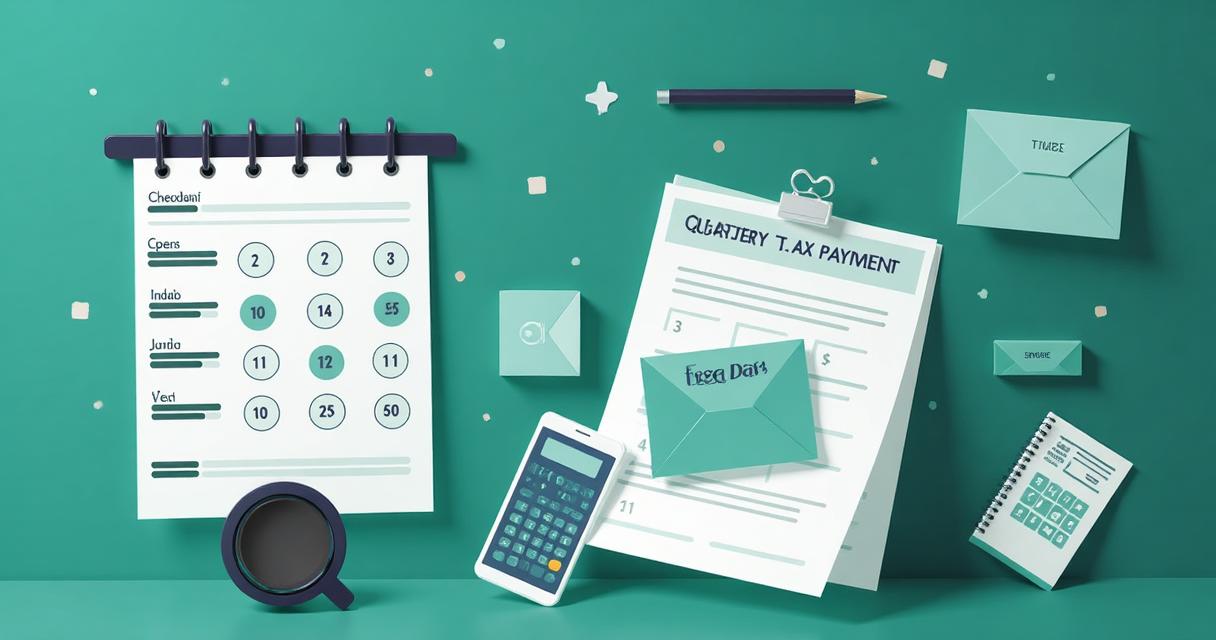
Internal Revenue Code Section 6654(c) establishes that there are four required installments for each taxable year, with statutory due dates of April 15, June 15, September 15, and January 15 of the following year for the first, second, third, and fourth installments respectively. The IRS describes the same structure in its guidance on the underpayment penalty, noting that payments generally correspond to income earned in each preceding period. In practice, if a statutory due date falls on a weekend or federal holiday, the deadline shifts to the next business day, so sole proprietors should always verify the exact date for the current year on IRS.gov or in the current Form 1040-ES instructions rather than assuming April 15 (or the other dates) always applies literally.
How the Underpayment Penalty Works
If you do not pay enough through withholding and timely estimated payments, Internal Revenue Code Section 6654 imposes an addition to tax, commonly called the estimated tax penalty. The statute calculates this by applying the underpayment rate established under Section 6621 to the amount of the underpayment, for the period the underpayment remained unpaid. Because the underpayment rate under Section 6621 is tied to the federal short-term rate and adjusts periodically, this guide does not state a specific current percentage; sole proprietors should check the IRS page on the underpayment of estimated tax penalty, which references the published quarterly interest rates, for the rate that applies to the relevant period.
A Hypothetical Illustration
Imagine a sole proprietor expects to owe $12,000 in combined federal income and self-employment tax for the year, with no withholding from any other source. If the applicable prior-year tax test is the appropriate basis for her facts, and her total tax liability in the prior year, which covered a full 12 months, was also $12,000, dividing that amount into four equal installments would suggest a hypothetical $3,000 payment per quarter. This is a simplified illustration of how the four-installment structure works, not a specific calculation for any real taxpayer, since actual required installment amounts depend on which safe harbor applies, income that is uneven throughout the year, and figures specific to the tax year.
Common Mistakes Sole Proprietors Make
- Waiting until April to pay anything, which can trigger the Section 6654 penalty even if the full tax is paid by the annual filing deadline, because the penalty is calculated separately for each missed installment.
- Dividing annual income into four equal amounts when income is seasonal. The IRS allows an annualized income installment method for unevenly earned income, described in Publication 505, which can reduce or eliminate penalties tied to early-year installments.
- Using an old worksheet without checking the applicable tax-year instructions, because higher-income conditions and other requirements must be checked in the relevant Form 1040-ES instructions.
- Forgetting self-employment tax when estimating the total tax to divide into installments, since estimated tax covers both income tax and self-employment tax for sole proprietors.
- Assuming a due date is always the 15th of the month without checking whether that date falls on a weekend or holiday for the relevant year, which shifts the actual deadline.
Staying on Top of Quarterly Payments
Because estimated tax depends on tracking income and expenses as the year progresses, sole proprietors benefit from reviewing their numbers before each installment date rather than waiting until the end of the year. Logging receipts and expenses consistently, for example with an app like Fisnap, can make it easier to produce an up-to-date profit estimate before each quarterly deadline, though the payment calculation itself should follow the current Form 1040-ES worksheet and Publication 505, not an estimate from any single tool.
Related Reading
- Tax Deductible Expenses for Sole Proprietors
- How Long to Keep Business Receipts
- Invoice Requirements for Freelancers
Compare hypothetical income and expense totals using the profit calculator, then use Form 1040-ES for federal tax calculations. The profit tool does not apply US tax brackets, self-employment tax or estimated-payment tests.
Sources
- IRS: About Form 1040-ES, Estimated Tax for Individuals
- IRS FAQ: Estimated Tax for Individuals
- IRS Publication 505, Tax Withholding and Estimated Tax
- IRS: Underpayment of Estimated Tax by Individuals Penalty
- 26 U.S. Code Section 6654, Failure by individual to pay estimated income tax
This article provides general information about US federal estimated tax rules for sole proprietors and is not individual tax advice. Consult a qualified tax professional or IRS.gov for guidance on your specific situation.